

Bachelor's Degree in Psychology
Leave us your details and we will contact you
4 years
September 2027
On campus
240 (60/year)
Spanish
40 places
Programme Objectives
The Bachelor's Degree in Psychology at UNINDE offers comprehensive training that combines theory, research, and practice, preparing students to work in various fields within psychology. Throughout the programme, you will acquire the necessary skills to assess, intervene in, and promote mental health, with an ethical and professional approach.
Acquire fundamental knowledge of psychology
Build a solid foundation in key fields such as clinical psychology, educational psychology, social psychology and organisational psychology.
Promote research in psychology
Develop investigative and scientific skills to generate knowledge in the field of psychology, applying it to practical cases.
Develop skills in psychological assessment
Learn to apply diagnostic and assessment tools and techniques to intervene in various psychological contexts.
Prepare for professional practice
Equip students to work independently or in multidisciplinary teams in health institutions, educational organisations, and companies.
Apply effective psychological interventions
Design, implement and evaluate intervention plans to promote the mental health and emotional well-being of individuals and groups.
Integrate ethical and legal aspects
Incorporate into professional practice an ethical approach in accordance with current regulations in psychology.
Methodology and support
Theoretical classes, practical workshops, simulations of psychological interventions and guaranteed internships in professional settings.
Development of technical knowledge, skills in psychological assessment and intervention techniques, professional ethics, effective communication and collaborative work in multidisciplinary teams.
Progressive monitoring of learning through practical and theoretical tests, applied projects and Final Degree Project.
Academic tutoring, professional mentoring and individualized follow-up throughout the training programme.
Virtual campus, advanced digital environments, updated bibliography and professional simulation tools.
Integration of technological innovation with ethical sensitivity and social commitment, aligned with UNINDE's DNA.
ACADEMIC STRUCTURE
Curriculum
The Psychology degree programme is designed to provide you with a comprehensive education. Over the course of four years, you will combine theoretical knowledge, practical experience, and professional practice, preparing our students to become highly qualified psychologists with expertise in the technical, ethical, and human aspects of applied psychology.
Basic training
Fundamental subjects in health sciences and social sciences: basic psychology, biology, social psychology, neuroscience, psychopathology and statistics, which constitute the scientific basis of the degree.
Required subjects
Key subjects in the field of clinical psychology, educational psychology, organisational psychology, social psychology and psychological assessment, as well as professional ethics, therapeutic intervention and health psychology.
Clinical practice
Practical training in real-world settings such as psychological practices, hospitals, mental health centres, schools and organisations, with direct contact with patients and professional teams.
Electives
Subjects geared towards specialisation in areas such as child psychology, forensic psychology, sports psychology, work psychology and other areas of specialised intervention.
Final Degree Project
Integrative project that consolidates the skills acquired throughout the degree.
PROFESSIONAL FUTURE
Career opportunities and employability
UNINDE Psychology graduates have the necessary training to work independently or in multidisciplinary teams, in various public and private environments, intervening in the psychological and emotional well-being of individuals, groups and organisations.

Professional practice in private clinics and psychological offices, both in the public and private sectors, attending to cases of psychotherapy, psychodiagnostics and family therapy.

Intervention in health centres, health prevention and promotion programmes, and psychological care in the community.

Performance in schools and educational centres, offering psychological support to students, teachers and families, and developing intervention and prevention programmes.

Application of psychology in the workplace, in the design of personnel selection programmes, team development, improvement of organisational well-being and training in human resource management.

Opportunities in the academic and research field, contributing to the development of psychological knowledge through research and teaching projects in universities and educational centres.

Intervention in mental health centres, hospitals and neuropsychological rehabilitation units, working with patients who have psychological and neurological disorders.
PROFESSIONAL FUTURE
Company internship
Internships are a fundamental part of the Psychology Degree at UNINDE, providing students with the opportunity to gain direct experience in the professional field. Through collaborations with psychology practices, hospitals, educational centres, and other mental health institutions, students can apply what they have learned in real-world situations, developing their skills and competencies in a professional and collaborative environment.
Admissions
Admission process
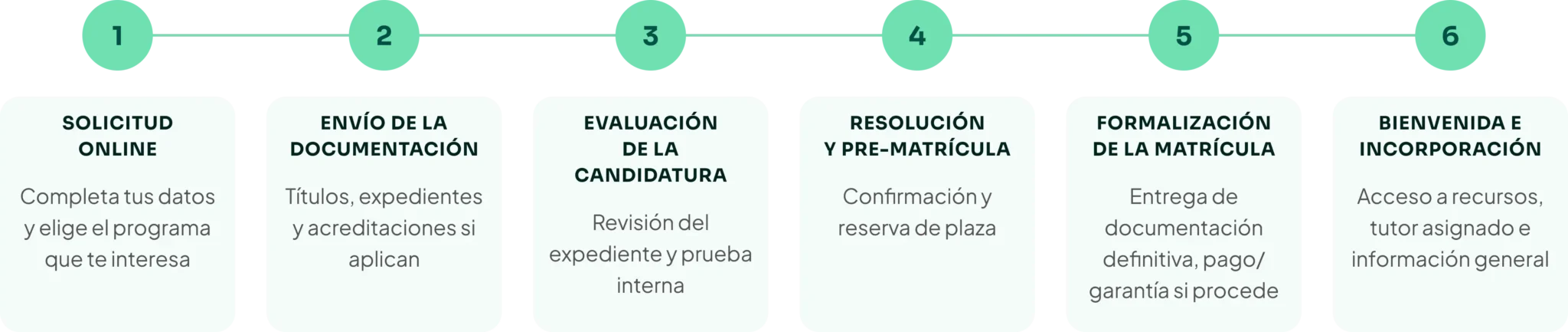
Complete your registration quickly and easily. Follow these steps to secure your place and begin your studies in the Bachelor's Degree in Psychology, with everything you need to access resources and tools from day one.
Access requirements and documentation
To be admitted to the Bachelor's Degree in Psychology, students must meet the requirements established by current regulations and submit the necessary documentation. The requirements are detailed below according to the admission route:
Valid academic access
High School Diploma, Higher Level Vocational Training or other official accreditation that allows access to university.
Official academic record
Full academic certificate detailing subjects taken, grades obtained and completion of previous studies.
Identification document
Valid ID card or passport and, if applicable, official recognition or translation of foreign studies.
Language accreditation
A recognized certificate that proves the required language level, when the qualification establishes this specific requirement.
Additional documentation
Additional requirements arising from agreements, internships, mobility or other particular academic situations.
Regulations and accreditations
The Bachelor's Degree in Nursing is regulated by the current regulations governing official university education in Spain and the conditions that guarantee its academic quality, scientific rigour and official recognition.
The organisation, verification and accreditation of official study plans is carried out in accordance with the requirements established by Royal Decree 822/2021, which regulates the organisation of official university studies and the assurance of their quality.
Furthermore, Psychology studies leading to an official degree are verified and registered in the Registry of Universities, Centres and Degrees (RUCT) to ensure that they are valid throughout the national territory and meet the required quality standards.
Official links
Want to know more?
Download the complete curriculum
Access detailed information on subjects, competencies, ECTS credits, and course structure for the Bachelor's Degree in Psychology at UNINDE. This plan will help you understand what you will study at each stage of the degree and how the theoretical and practical content are integrated.
Contact the Guidance Team
Do you have questions about admission, enrolment, internships, or career opportunities for the Psychology degree? Our Guidance Team is available to answer your questions, explain the application process, or help you prepare your application. Request information and we'll answer all your questions.
FAQs
We have gathered here the answers to the most common questions about UNINDE so that you can find the information you need quickly and easily.
If your question remains unanswered or you need more details, our team will be happy to help. Just write to us and we'll get back to you as soon as possible.
How long does the Psychology degree last and how many credits does it have?
The Bachelor's Degree in Psychology lasts 4 years (240 ECTS), combining theoretical training with applied practice in assessment and intervention, which prepares you to understand and analyse human behaviour in different contexts.
What will I learn in the Psychology Degree?
You will study basic and applied psychological processes, assessment methods, intervention techniques and analysis of human behaviour, with scientific and practical training that covers multiple areas of psychology.
Are internships mandatory in Psychology?
Yes, professional internships are part of the curriculum and allow you to apply what you have learned in real centres such as health services, schools or organisations, which facilitates your entry into the workforce.
What career opportunities does a Psychology degree offer?
The degree provides training for fields such as education, organisations, sport and research. Practising a regulated healthcare profession requires additional training and qualifications; the degree alone does not qualify graduates to practise in healthcare.
Can I practice as a clinical psychologist with only a degree in Psychology?
No. In Spain, the degree alone does not qualify graduates for healthcare practice. The Master’s in General Health Psychology qualifies graduates as General Health Psychologists; Clinical Psychology is a separate specialist qualification, obtained through the PIR residency training route.
What academic requirements are needed to access the Bachelor's Degree in Psychology?
You must have an official accreditation that enables access to the university (such as a Baccalaureate, Higher Level Vocational Training or validated foreign studies) and comply with the admission requirements established by current university regulations.