

Master's Degree in Management and Administration of Agri-food Companies
Leave us your details and we will contact you
1 year
Spring 2027
On campus
60
Spanish
30 in person
Programme Objectives
UNINDE's Master's in Management and Administration of Agri-food Businesses offers advanced training in strategic management and innovative technologies applied to the agri-food sector. Throughout the programme, students will acquire the necessary skills to optimise operations, digitize businesses, and promote sustainability, preparing them to lead projects in a global and competitive environment.
Analyse the economic and legal environment
Analyse the economic and legal environment of the agri-food sector in Spain and the EU, including the CAP and public support policies, to assess their impact on the competitiveness of agri-food companies.
Examine the design and management of agri-food
Examine the design and management of agri-food operations, including quality, food safety and traceability, applying production technologies to improve efficiency and sustainability.
Understand economic and financial indicators
Understand economic and financial indicators of agri-food businesses, and learn about financing and investment instruments to optimise profitability, liquidity and solvency.
Understand the principles of agri-food marketing
Understand the principles of agri-food marketing, from segmentation to the use of digital marketing strategies, online sales and analysis of business performance metrics at a national and international level.
Understand the fundamentals of strategic management
Understand the fundamentals of strategic management in agri-food companies, understanding the relationship between mission, objectives and growth strategies, integration, diversification and internationalization.
Understand enabling digital technologies
Understand enabling digital technologies in the agri-food chain (IoT, automation, cloud platforms) and their role in the digital transformation of companies in the sector.
Methodology and support
Theoretical classes, simulations of real cases and practical work in companies in the agri-food sector, applying the knowledge acquired in professional environments.
Development of technical skills, business strategy, effective communication, professional ethics and collaborative work in multidisciplinary teams.
Progressive monitoring of learning through practical and theoretical tests, applied projects and Master's Thesis.
Academic tutoring, professional mentoring and individualized follow-up throughout the training programme.
Virtual campus, advanced digital environments, updated bibliography and professional simulation tools.
Integration of technological innovation with ethical sensitivity and social commitment, aligned with UNINDE's DNA.
ACADEMIC STRUCTURE
Curriculum
The curriculum for the Master's in Management and Administration of Agri-food Companies is designed to offer comprehensive training, combining business management and technology applied to the agri-food sector. Throughout the programme, students will acquire theoretical knowledge, professional internships, and direct field experience, preparing them to manage and lead agri-food companies in a competitive and technological environment.
First semester
Students focus on understanding the economic and legal environment of the agri-food sector, while acquiring knowledge of finance and accounting as applied to businesses in the sector. They also delve into production technologies, food quality and safety, and operations and supply chain management. Commercial management and marketing in the agri-food sector completes this semester.
Second semester
Key topics covered include people management, leadership, and talent management, as well as digital transformation and new technologies in the agri-food chain. Students also learn about business intelligence and data analytics for strategic decision-making. Furthermore, they focus on the strategic management and planning of agri-food companies. The semester includes external academic internships and the development of the Master's Thesis, where students apply their knowledge to real-world projects.
Professional internships
During the programme, students will complete external academic internships in agri-food companies, industry consultancies, or technology organisations, where they can apply their acquired knowledge in real-world situations. These internships provide direct experience in business management, technological innovation, and process optimisation within the agri-food sector, enabling students to develop key skills for team management, digital transformation, and business strategies.
Master's Thesis
The Master's Thesis (TFM) is an integrative project in which students will apply the knowledge acquired throughout the programme. Students will develop a real-world project in areas such as technological innovation, supply chain management, or agri-food marketing strategies, demonstrating their ability to address complex problems and propose practical solutions within the agri-food sector.
PROFESSIONAL FUTURE
Career opportunities and employability
Graduates of the Master's in Management and Administration of Agri-food Companies at UNINDE have the necessary training to work independently or in multidisciplinary teams in a variety of sectors, both public and private, performing key functions in management, innovation and technological development in the agri-food field.
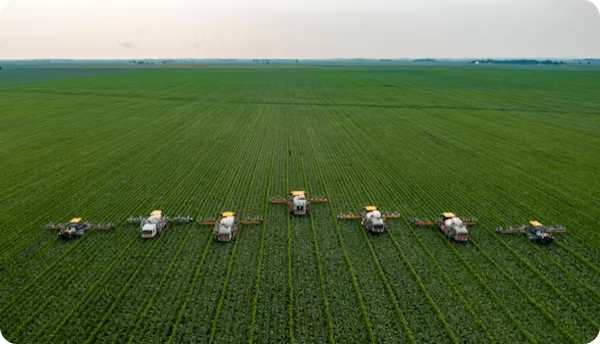
Professional practice in the field of agri-food business management, working on business strategy, production, distribution and marketing of agri-food products.

Advising companies in the sector on process management, supply chain optimisation and technologies applied to agriculture.
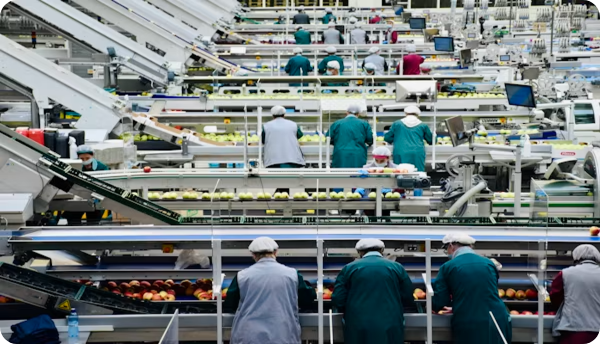
Performance in logistics management and optimisation of production processes and distribution of agri-food products.
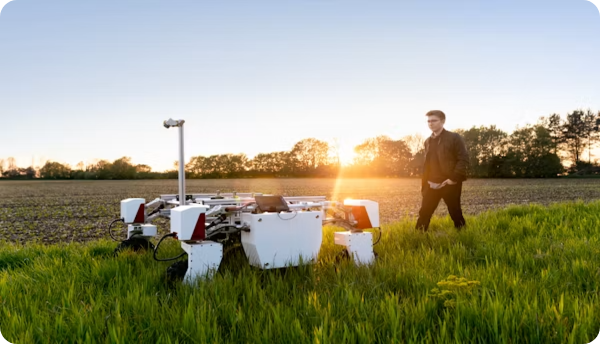
Implementation and management of advanced technologies in the agri-food sector, such as precision agriculture, automation and digitization of processes.

Research in key areas such as sustainability, emerging technologies and new agri-food practices, contributing to the advancement of the sector.

Professional development in academic training in the agri-food sector, imparting knowledge and strategies in educational and specialised training centres.

Leadership in multidisciplinary teams, management of agri-food projects and management of companies in the agri-food sector.
PROFESSIONAL FUTURE
Company internship
Professional internships are an essential part of UNINDE's Master's in Management and Technology of Agri-food Companies, providing students with the opportunity to gain direct experience in the field. Through collaborations with agri-food companies, technology consultancies, and industry organisations, students apply their knowledge in real-world settings, developing their management skills, technological innovation, and business strategies in a professional environment.
Admissions
Admission process
Complete your registration quickly and easily. Follow these steps to secure your place and begin your training in the Master's in Management and Technology of Agri-food Companies, with everything you need to access resources and tools from day one.
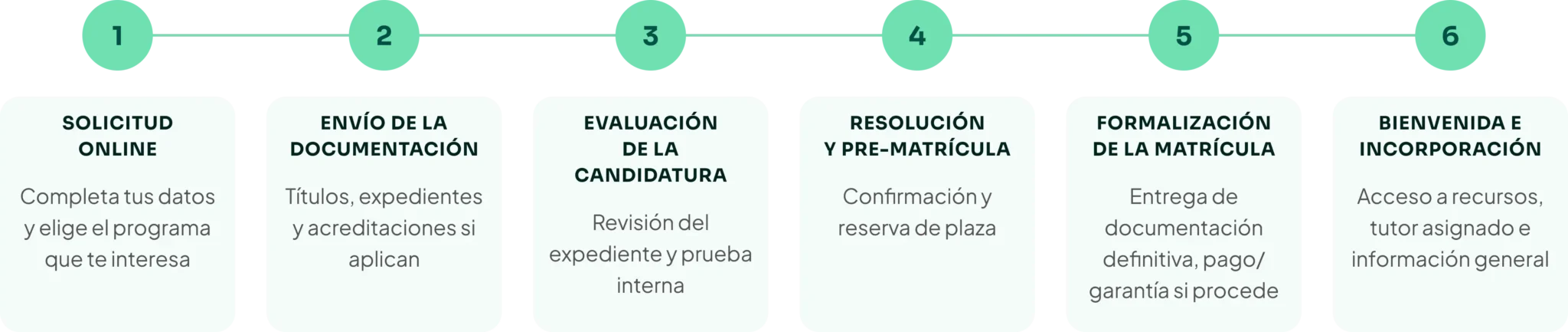
Access requirements and documentation
To be admitted to the Master's in Management and Technology of Agri-food Businesses, students must meet the requirements established by current regulations and submit the necessary documentation. The requirements are detailed below according to the admission route:
Valid academic access
Official university degree, Bachelor's degree or equivalent in related areas, such as Business Sciences, Economics, Engineering or Agriculture, among others.
Official academic record
Full academic certificate detailing subjects taken, grades obtained and completion of previous studies.
Identification document
Valid ID card or passport and, if applicable, official recognition or translation of foreign studies.
Language accreditation
A recognized certificate that proves the required language level, when the qualification establishes this specific requirement.
Additional documentation
Additional requirements arising from agreements, internships, mobility or other particular academic situations.
Regulations and accreditations
The Master's Degree in Management and Administration of Agri-food Companies is governed by the current regulations on official university education in Spain, guaranteeing its academic quality, scientific rigour and official recognition.
The organisation, verification and accreditation of official curricula follow the requirements laid down in Royal Decree 822/2021, which regulates the organisation of university education and ensures its quality throughout the Spanish university system.
Furthermore, the Master's studies are verified and registered in the Registry of Universities, Centres and Degrees (RUCT) from the Ministry of Universities, which ensures that the degree is valid and recognized throughout the national territory and in the European Higher Education Area (EHEA).
Official links
Want to know more?
Download the complete curriculum
Access detailed information on subjects, competencies, ECTS credits, and structure of the Master's in Management and Technology of Agri-food Businesses at UNINDE. This plan will help you understand what you will study at each stage of the degree and how the theoretical and practical content are integrated.
Contact the Guidance Team
Do you have questions about admission, enrolment, internships, or career opportunities with the Master's programme? Our Guidance Team is available to answer your questions, explain the application process, or help you prepare your application. Request information and we'll answer all your questions.
FAQs
We have gathered here the answers to the most common questions about UNINDE so that you can find the information you need quickly and easily.
If your question remains unanswered or you need more details, our team will be happy to help. Just write to us and we'll get back to you as soon as possible.
Is this master's degree suitable for someone with no prior experience in the agri-food sector?
Yes, this master's programme is designed both for professionals in the agri-food sector who wish to specialize and for individuals with backgrounds in other areas who want to shift their careers towards the sector. The training is comprehensive and builds upon the foundation, ensuring that all students acquire the necessary skills to lead in the agri-food industry.
What type of professional profile is best suited for this master's degree?
This master's programme is designed for professionals interested in leading agri-food companies, as well as managers, entrepreneurs, technology consultants, and sustainability specialists seeking to acquire business management skills applied to the agri-food sector. It is ideal for individuals looking to expand their training and technological skills for the transformation of the sector.
Is the master's programme offered in person or online?
The published mode of study for this master’s programme is on campus. Ask the guidance team which modes are available for your chosen intake.
What support will I receive during the final master's project (TFM) process?
During the development of the Master's Thesis (TFM), you will receive personalised guidance from academic tutors and experts in the agri-food sector, who will help you integrate the knowledge acquired during the master's programme and focus it on a real project, with the possibility of presenting it to companies in the sector.
What are the entry requirements for this master's degree?
Admission to the Master's in Management and Technology of Agri-food Businesses requires a university degree or equivalent, preferably in Business Administration, Economics, Engineering, or Agriculture, although other related degrees will be considered. An interest in the agri-food sector and business management is also important.
Does this master's programme offer networking opportunities with industry professionals?
The programme includes collaborative projects and placements in agri-food companies, offering opportunities to meet professionals and expand your network.
Can I access scholarships or grants for this master's degree?
Check UNINDE’s admissions and scholarships section and contact the guidance team for details of available schemes, eligibility requirements and deadlines relevant to you. Awards depend on the conditions of each scheme.